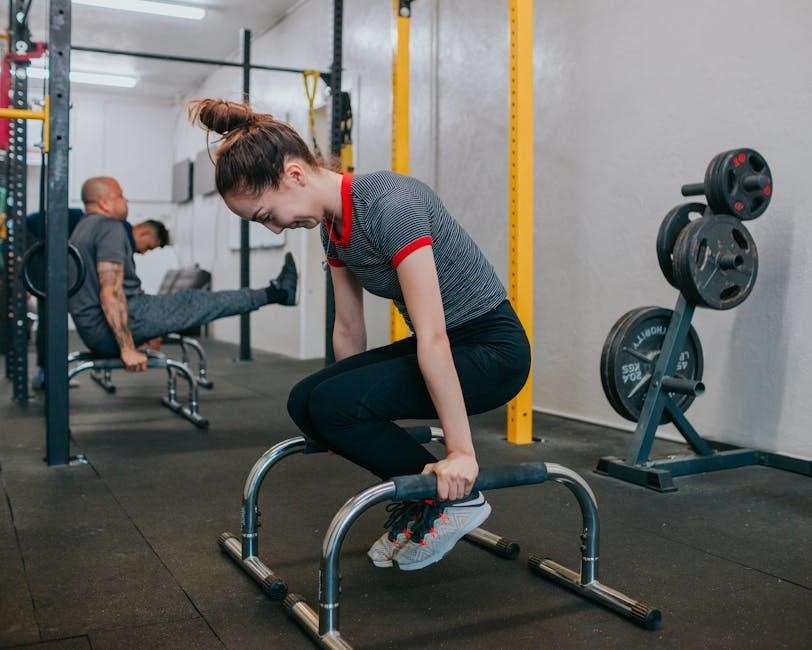
Netball Training Program: 6-Week Plan
This comprehensive 6-week netball program, inspired by 2025 resources, focuses on foundational skills, tactical awareness, and competition readiness.
Week 1: Foundations & Fitness
This initial week establishes core fitness and fundamental netball skills. Begin with a dynamic warm-up, preparing muscles for activity. Focus on basic passing and receiving techniques, emphasizing accuracy and footwork. Cardiovascular endurance training is crucial; aim for consistent sessions to build stamina.
Prioritize commitment – a 12-month plan suggests 25 hours weekly, while a 6-month plan requires 30. Integrate a lesson plan focusing on netball skills, including warm-ups, strength, agility, and balance drills. This builds a solid base for advanced training later in the program.
Warm-up & Dynamic Stretching
A thorough warm-up is paramount, preparing the body for intense netball activity. Incorporate dynamic stretches like leg swings, arm circles, and torso twists to increase blood flow and flexibility. Focus on movements mimicking netball actions – quick steps, reaching, and pivoting.
This initial phase, as outlined in 2025 training plans, should last 10-15 minutes. Prioritize movements that enhance agility and range of motion, reducing injury risk. A well-executed warm-up maximizes performance and sets the stage for effective skill development throughout the session.

Basic Netball Skills – Passing & Receiving
Mastering fundamental passing and receiving techniques is crucial for netball success. Begin with chest passes, focusing on accuracy and speed. Progress to shoulder passes and overhead passes, emphasizing proper technique and follow-through. Receiving drills should concentrate on soft hands and quick footwork to create space.
Year 10 health and physical education lesson plans highlight these skills. Incorporate partner drills and small-sided games to reinforce learning. Consistent practice builds muscle memory and improves overall ball control, forming the foundation for more advanced play.
Cardiovascular Endurance Training
Netball demands high levels of cardiovascular fitness for sustained performance. Implement interval training, alternating between high-intensity sprints and recovery periods, mirroring game demands. Continuous running at a moderate pace builds a strong aerobic base. Incorporate shuttle runs and agility drills to enhance endurance and court coverage.
A 6-week plan requires progressive overload, gradually increasing intensity and duration. Prioritize injury prevention with proper warm-ups and cool-downs. This foundational fitness supports skill execution and reduces fatigue during matches;
Week 2: Defensive Principles
This week concentrates on establishing a solid defensive foundation. Focus drills on footwork and marking techniques, emphasizing quick reactions and maintaining a balanced stance. Players will practice defensive positioning, learning to intercept passes and deny space. Agility and speed training are crucial for effective shadowing and closing down opponents.
Sessions should incorporate reactive drills, simulating game scenarios. Understanding defensive principles is vital for disrupting attacking plays and gaining possession. Consistent practice builds confidence and tactical awareness.
Footwork & Marking Drills
These drills refine agility and defensive positioning. Implement shuttle runs and cone drills to enhance foot speed and change of direction. Marking exercises focus on maintaining a balanced stance, mirroring opponent movements, and denying passing lanes. Players practice staying on their feet, avoiding contact, and anticipating plays.
Drills should progress from individual work to paired and small-group scenarios, simulating game pressure. Emphasis is placed on quick reactions, efficient footwork, and effective communication. Consistent repetition builds muscle memory and improves defensive reflexes.
Defensive Positioning & Interceptions
Mastering defensive positioning is crucial for effective interceptions. Players learn to anticipate passes by reading the attacker’s body language and understanding court flow. Drills emphasize zonal marking, denying space, and forcing errors. Focus on maintaining a strong defensive stance and quick footwork to close down passing options.
Interception practice involves reacting to simulated passes, timing jumps, and securing clean catches. Players develop the ability to read the play and intercept effectively, turning defense into attack. Communication and teamwork are vital for coordinated defensive efforts.
Agility & Speed Training
Netball demands explosive agility and rapid changes in direction. Training incorporates cone drills, shuttle runs, and ladder work to enhance footwork and responsiveness. Players practice quick starts, stops, and pivots, simulating game-like movements. Emphasis is placed on maintaining balance and control during high-speed maneuvers.
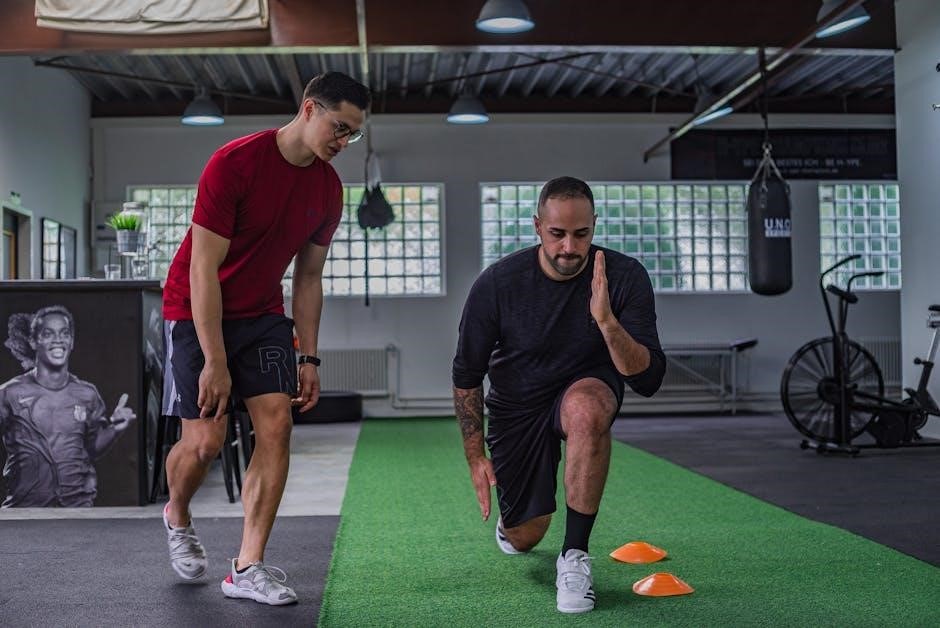
Speed training focuses on improving acceleration and sprinting technique. Interval training and short sprints build endurance and power. These drills are designed to enhance players’ ability to cover ground quickly and effectively, gaining a competitive edge on the court.
Week 3: Attacking Strategies
This week concentrates on developing effective attacking plays and maximizing scoring opportunities. Sessions focus on movement within the attacking third, creating space, and utilizing different passing angles. Players will refine shooting technique, emphasizing accuracy and consistency under pressure. Drills incorporate dynamic movement and quick decision-making.
Strength training targets core and upper body muscles, crucial for shooting power and stability. This phase builds foundational strength to support advanced skills and prevent injuries, enhancing overall athletic performance.
Attacking Third Movement & Space Creation
This session emphasizes dynamic off-ball movement to disrupt defensive lines and create scoring opportunities; Players will practice leading, cutting, and utilizing angles to generate space for passes and drives. Drills focus on timing and communication, ensuring coordinated movement within the attacking third.
Emphasis is placed on recognizing defensive weaknesses and exploiting them through intelligent positioning and quick changes of direction, mirroring strategies outlined in Year 10 health and physical education plans.
Shooting Technique & Accuracy
This module refines shooting mechanics for increased accuracy and consistency under pressure. Players will focus on proper footwork, arm action, and follow-through, building upon foundational skills. Drills incorporate varied shooting distances and angles, simulating game scenarios.
Emphasis is placed on maintaining composure and adapting technique when fatigued, crucial for sustained performance. Rebounding drills are integrated to maximize scoring opportunities, mirroring advanced skill development strategies.
Strength Training – Core & Upper Body
This session targets core stability and upper body strength, vital for netball performance and injury prevention. Exercises include planks, Russian twists, and medicine ball throws to enhance core engagement. Upper body work focuses on shoulder strength and endurance with exercises like push-ups and resistance band rows.
Functional training principles, inspired by figure skating research, are applied to improve postural control and single-leg stability, crucial for dynamic movements on court.
Week 4: Game Simulation & Tactical Awareness

This week emphasizes applying skills in game-like scenarios, fostering tactical understanding. Small-sided games concentrate on swift transitions between attack and defense, mirroring real match conditions. Centre pass strategies are explored, including variations to disrupt opponents and create scoring opportunities.
Balance and landing mechanics drills, informed by postural control research, minimize injury risk. Players refine decision-making and spatial awareness, preparing for competitive play.
Small-Sided Games – Focus on Transition
These games, utilizing reduced court space and player numbers, accelerate decision-making and enhance reactive skills. The primary focus is on rapid transitions – swiftly moving from defensive rebounds to attacking plays, and vice versa. Players practice quick passing, intelligent movement off the ball, and effective communication.
Emphasis is placed on exploiting space created by these transitions, mirroring the dynamic flow of a full netball match. This builds tactical awareness and game intelligence.
Centre Pass Strategies & Variations
Mastering the centre pass is crucial for dictating game tempo and initiating attacking plays. This session explores diverse centre pass options, including direct passes to the Goal Attack or Wing Attack, and strategic lob passes over the defensive line. Players will practice varying pass heights and speeds to challenge defenders.
Drills focus on creating space, timing movements, and executing clean receptions under pressure. Variations include decoy runs and quick switches to exploit defensive weaknesses, enhancing tactical flexibility.
Balance & Landing Mechanics

Effective balance and controlled landings are paramount for injury prevention and athletic performance in netball. This session, informed by postural control research, emphasizes proper technique when jumping, pivoting, and changing direction. Players will practice absorbing impact through bent knees and maintaining a stable core.
Drills incorporate single-leg balance exercises and progressive landing drills, focusing on alignment and minimizing stress on joints. Understanding these mechanics, similar to figure skating training, enhances agility and reduces the risk of ankle sprains.
Week 5: Advanced Skills & Combinations
This week elevates netball proficiency with advanced passing techniques like lob passes and drives, demanding precision and court awareness. Shooting drills intensify, simulating pressure situations and focusing on rebounding strategies for second-chance opportunities.
Players refine postural control and single-leg stability, crucial for dynamic movements. These drills, mirroring functional training for figure skaters, build resilience and prevent injuries. Combinations emphasize seamless transitions and coordinated offensive plays, preparing the team for competitive scenarios.
Advanced Passing – Lob Passes & Drives
This session focuses on mastering lob passes for clearing defenders and creating scoring opportunities, demanding accurate trajectory and timing. Players practice driving passes, utilizing speed and agility to penetrate defensive lines, requiring quick decision-making and precise hand-eye coordination.
Drills emphasize deceptive movements and varied pass selection, enhancing offensive unpredictability. Emphasis is placed on receiving these passes under pressure, maintaining balance, and transitioning swiftly into attacking positions. Successful execution requires strong communication and spatial awareness.
Shooting Under Pressure & Rebounding
This training block concentrates on maintaining shooting accuracy when closely guarded, simulating game-like intensity. Players practice quick release techniques and consistent follow-through, minimizing defensive disruption. Rebounding drills emphasize aggressive positioning, timing jumps, and securing possession against opponents.
Sessions incorporate varied shooting distances and angles, building adaptability. Players learn to anticipate rebounds, box out effectively, and transition rapidly from offense to defense. Mental fortitude and composure under pressure are key components of this training phase.
Postural Control & Single Leg Stability
Drawing from figure skating research, this phase enhances balance and injury prevention. Netball demands dynamic movements on one leg; therefore, exercises focus on strengthening stabilizing muscles. Drills include single-leg squats, lunges, and balance board work, improving proprioception and core engagement.
Gravicorder measurements (as referenced in postural control studies) can inform individualized training. Players practice landing mechanics, absorbing impact effectively, and maintaining postural alignment during rapid changes in direction. This builds resilience against ankle sprains and other common netball injuries.
Week 6: Competition Preparation & Review
This final week prioritizes game readiness and performance analysis. A full-game scrimmage allows players to implement learned skills under pressure, followed by detailed analysis of strengths and weaknesses. Tactical review refines the game plan, addressing specific opponent strategies.
Crucially, injury prevention and recovery strategies are reinforced. Commitment to the 6 or 12-month plan (25-30 hours/week) is vital. WhatsApp communication protocols ensure efficient team management, alongside account security measures to mitigate digital risks, as detailed in recent guides.
Full Game Scrimmage & Analysis

The culminating scrimmage simulates competitive conditions, demanding application of all previously learned skills. Detailed observation focuses on tactical execution, player positioning, and transition speed. Post-game analysis utilizes a scoresheet to track key events – passes, interceptions, and errors – providing quantifiable data.
This data informs targeted feedback, identifying areas for individual and team improvement. Reviewing performance against established goals, as outlined in the periodization chart, ensures focused preparation for upcoming competitions. Commitment to consistent analysis is key.
Tactical Review & Game Plan Refinement
Following the scrimmage, a thorough tactical review dissects team performance, evaluating the effectiveness of centre pass strategies and overall game plan. Analysis identifies successful combinations and areas needing adjustment, referencing the periodization chart’s competitive priorities.
Refinement focuses on exploiting opponent weaknesses and strengthening defensive structures. This process, crucial for maximizing performance, demands open communication and collaborative problem-solving. A revised game plan, incorporating learnings, prepares the team for optimal competition readiness, emphasizing commitment.
Injury Prevention & Recovery Strategies
Proactive injury prevention is paramount, integrating postural control exercises – informed by figure skating research – and single-leg stability drills to address ankle sprain risks. Proper warm-up routines and cool-down stretches remain essential components, alongside balance and landing mechanics training.
Recovery strategies encompass adequate hydration, nutrition, and rest. Implementing a periodized approach minimizes overtraining. Addressing potential issues early, alongside WhatsApp communication for reporting discomfort, safeguards player wellbeing and sustains long-term participation.
Periodization Chart Integration (January-December Overview)
A year-round periodization chart, mirroring successful athletic models, structures training intensity and volume. January-March focuses on foundational fitness, building towards pre-season skill development (April-May). The competitive season (June-September) prioritizes maintenance and tactical refinement.
October-December transitions to active recovery and off-season conditioning. Commitment levels vary – 25 hours/week for dedicated athletes, 30 for intensive programs. This cyclical approach, detailed in available resources, prevents plateaus and optimizes peak performance throughout the year.
Netball Training Scoresheet Implementation
Implementing a detailed scoresheet during training sessions provides quantifiable data for performance analysis. Track key events across four quarters: successful passes, interceptions, shooting accuracy, and errors like bad passes or dropped balls. This data informs individualized feedback and identifies areas needing improvement.
Consistent scoresheet use, as outlined in training documentation, allows coaches to monitor player progress objectively. It facilitates targeted drills and adjustments to the 6-week program, maximizing skill development and tactical understanding throughout the season.
Functional Training Considerations (Based on Figure Skating Research)
Integrating functional training, inspired by research on figure skaters, enhances netball performance and injury prevention. Studies demonstrate benefits of exercises improving postural control and single-leg stability – crucial for landing and agility.
Applying these principles to netball involves drills mimicking game movements, strengthening core and lower body. This approach, detailed in program resources, builds resilience against ankle sprains and improves overall athletic capability, extending player careers and maximizing training gains within the 6-week plan.

Commitment & Scheduling (12/6 Month Plans)
Success hinges on consistent commitment; a structured schedule is paramount. A 12-month plan suggests approximately 25 hours of training weekly, while a focused 6-month plan increases this to 30 hours.
Prioritize dedicated training sessions, incorporating the 6-week program’s phases. Effective scheduling, as highlighted in available resources, balances skill development, fitness, and recovery. This ensures peak performance and minimizes burnout, fostering long-term player development and team success throughout the year.
WhatsApp Communication Protocols (Team Management)
Efficient team management relies on clear WhatsApp protocols. Limit group sizes to under 51 members to avoid functionality issues, allowing for immediate notifications.
Establish guidelines for message content – training updates, schedule changes, and essential announcements only. Avoid excessive chatter. New users should “warm up” accounts by gradually adding contacts and engaging in conversations to prevent blocks. Binding an email to the account enhances security and recovery options, crucial for sustained communication.

Account Security & Risk Mitigation (Digital Communication)
Protecting team communication requires robust account security measures; WhatsApp’s anti-abuse mechanisms can lead to account bans; proactive mitigation is vital. Avoid mass messaging or promotional content, especially with new accounts.
Enable email binding for easier recovery if access is lost. Be aware that complete ban avoidance isn’t guaranteed, but following best practices minimizes risk. If blocked, explore available unblocking methods promptly. Prioritize account safety to maintain consistent team communication throughout the netball program.
Domestic Installation & Usage (WhatsApp – Relevant for Team Communication)
Installing WhatsApp domestically can present challenges, but 2025 tutorials offer solutions for both iPhone and Android users. Successfully navigating installation is crucial for seamless team communication during the 6-week netball program.
New users should “warm up” their accounts by gradually adding contacts and engaging in conversations to avoid triggering anti-spam measures. Be mindful of verification code issues and potential temporary restrictions when exceeding contact limits. Consistent usage builds account reliability.
Account Recovery & Anti-Abuse Measures (WhatsApp)

WhatsApp’s robust anti-abuse system can lead to account restrictions, but recovery options exist. Understanding these measures is vital for maintaining consistent team communication throughout the 6-week netball training program. If blocked, access to chats is lost, and repeated attempts trigger further restrictions.
Binding an email to your account aids recovery. While complete avoidance of bans isn’t guaranteed, proactive measures significantly reduce risk. Seek assistance if verification codes aren’t received, and prioritize responsible usage.