
GCSE Mathematics: The Revision Guide ― Article Plan
Comprehensive guides from CGP and Richard Parsons are vital for 2025/2026 exams‚ offering online editions‚ videos‚ and quizzes for effective GCSE preparation.
GCSE Maths revision can feel daunting‚ but with the right approach and resources‚ success is achievable. This guide focuses on providing a structured pathway to mastering core concepts and excelling in your exams. Several excellent revision guides are available‚ notably those from CGP and Richard Parsons‚ catering to both Foundation and Higher tiers.
These resources‚ often including online editions with videos and quizzes‚ are designed for the 2025 and 2026 exam series. Customers consistently praise their clarity and comprehensive coverage‚ making them invaluable study aids. Effective revision isn’t just about rote learning; it’s about understanding the ‘why’ behind the maths‚ and these guides aim to deliver just that‚ boosting confidence and exam performance.
Understanding the GCSE Maths Exam
GCSE Maths exams are offered by several boards‚ primarily AQA‚ Edexcel‚ and OCR‚ each with slightly differing specifications. Understanding your specific exam board is crucial. A key decision is choosing between the Foundation and Higher tiers; Foundation aims for grades 1-5‚ while Higher targets grades 4-9.
Revision guides‚ like those from CGP and Richard Parsons‚ are tailored to these boards and tiers. The 2025 and 2026 exams will assess a broad range of mathematical skills. Familiarity with the exam format‚ question types‚ and time constraints is essential. Utilizing past papers and the online resources accompanying revision guides will significantly improve your preparedness and exam technique.
Exam Boards: AQA‚ Edexcel‚ OCR
AQA‚ Edexcel‚ and OCR are the primary exam boards for GCSE Maths‚ each presenting unique challenges and specifications. CGP and Richard Parsons produce revision materials specifically aligned with each board’s syllabus. Choosing the correct resources is paramount for effective preparation.
Edexcel often emphasizes problem-solving‚ while AQA may focus more on application. OCR provides a balanced approach. Ensure your revision guide corresponds to your school’s chosen board. The 2025/2026 exams will reflect these board-specific nuances‚ so targeted revision is key to maximizing your potential and achieving a strong grade.
Foundation vs. Higher Tier
GCSE Maths is offered at two tiers: Foundation and Higher. The Foundation tier is aimed at students working towards grades 1-5‚ covering core mathematical concepts. The Higher tier targets grades 6-9‚ demanding a deeper understanding and more complex problem-solving skills.
CGP and Richard Parsons both offer dedicated revision guides for each tier‚ ensuring content is appropriately challenging. Selecting the correct tier is crucial; attempting the Higher tier unprepared can be detrimental. Resources for 2025/2026 exams cater to both levels‚ providing targeted practice and boosting confidence for success.
Core Mathematical Concepts
GCSE Maths revolves around key concepts: Number and Algebra‚ forming the bedrock of mathematical understanding. Ratio‚ Proportion‚ and Rates of Change build upon these‚ demanding analytical skills. Geometry and Measures test spatial reasoning and practical application.
Effective revision guides‚ like those from CGP and Richard Parsons‚ break down these areas into manageable topics. Mastering these core concepts is vital for success in both Foundation and Higher tiers. Resources for the 2025/2026 exams emphasize a solid grasp of fundamentals‚ preparing students for complex problem-solving.
Number and Algebra
Number and Algebra form the cornerstone of GCSE Maths‚ demanding proficiency in manipulating numbers and symbols. Revision guides from CGP and Richard Parsons thoroughly cover integers‚ decimals‚ and fractions‚ alongside powers and roots. Understanding number patterns and sequences is also crucial.
Algebraic skills‚ including simplifying and expanding expressions‚ and solving equations‚ are heavily tested. Mastering these concepts‚ particularly for the 2025/2026 exams‚ builds a strong foundation for tackling more complex problems. Effective resources provide clear explanations and ample practice opportunities.
Ratio‚ Proportion and Rates of Change
Ratio‚ Proportion‚ and Rates of Change represent key areas within GCSE Maths‚ often requiring application to real-world scenarios. Comprehensive revision guides‚ such as those by CGP and Richard Parsons‚ provide focused practice on understanding and solving problems involving these concepts.
Students must grasp direct and inverse proportion‚ percentage change‚ and speed‚ distance‚ and time calculations. Mastering these skills is vital for success in the 2025/2026 exams; Resources emphasize clear explanations and step-by-step solutions‚ building confidence and problem-solving abilities.
Geometry and Measures
Geometry and Measures form a crucial component of the GCSE Maths syllabus‚ demanding a strong understanding of shapes‚ angles‚ and spatial reasoning. Revision guides from publishers like CGP and Richard Parsons offer targeted support in this area‚ preparing students for the 2025/2026 examinations.
Key topics include angle properties‚ area‚ perimeter‚ volume calculations for 2D and 3D shapes‚ and the application of Pythagoras’ Theorem and Trigonometry. Effective resources provide clear diagrams‚ worked examples‚ and practice questions to solidify understanding and build exam confidence.
Key Topics: Number
Number skills are foundational to GCSE Maths success‚ requiring mastery of various concepts. Revision guides‚ such as those by CGP and Richard Parsons‚ provide focused practice for the 2025/2026 exams. Core areas include working with Integers‚ Decimals‚ and Fractions‚ alongside understanding Powers and Roots.
Furthermore‚ recognizing and continuing Number Patterns and Sequences is vital. These guides offer clear explanations‚ worked examples‚ and ample practice questions to build fluency and confidence. Students benefit from targeted revision to tackle number-based problems effectively in their GCSE assessments.
Integers‚ Decimals and Fractions
GCSE Maths revision necessitates a strong grasp of Integers‚ Decimals‚ and Fractions. Guides from Richard Parsons and CGP offer targeted practice in performing calculations with these number types. Students must confidently add‚ subtract‚ multiply‚ and divide them‚ converting between forms as needed.
Understanding negative numbers (integers) is crucial‚ alongside decimal place value and fractional equivalence. These resources for the 2025/2026 exams provide clear explanations and numerous examples. Mastering these fundamentals builds a solid base for more complex mathematical concepts encountered throughout the GCSE syllabus.
Powers and Roots
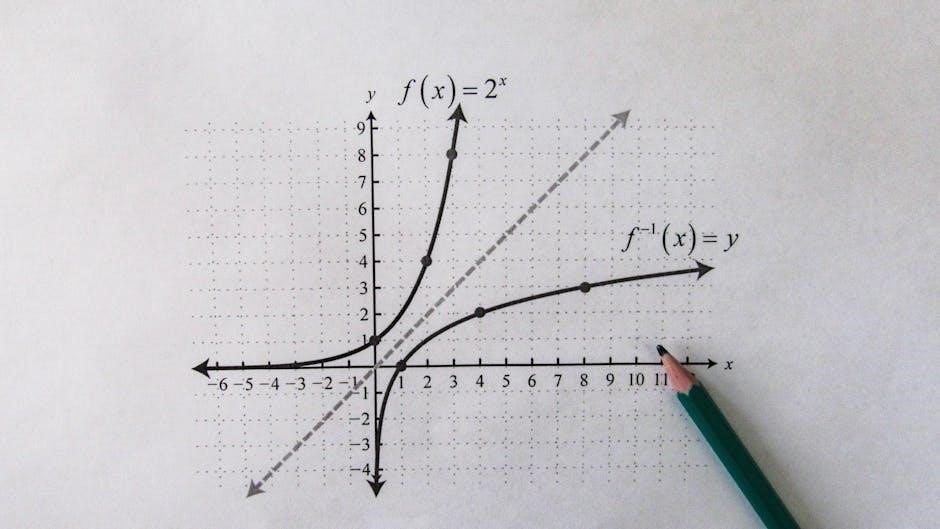
GCSE Maths revision requires proficiency in Powers and Roots‚ a core component of number work. Revision guides by Richard Parsons and CGP Books provide focused practice on understanding indices‚ including square roots‚ cube roots‚ and higher powers. Students must learn to simplify expressions involving powers and apply index laws effectively.
These resources‚ geared towards the 2025/2026 exams‚ emphasize recognizing patterns and applying these concepts to problem-solving. A solid understanding of powers and roots is essential for tackling algebraic manipulation and more advanced mathematical topics within the GCSE curriculum‚ ensuring exam success.
Number Patterns and Sequences

GCSE Maths revision necessitates a firm grasp of Number Patterns and Sequences‚ a frequently tested area. Resources like Richard Parsons’ guides and CGP Books’ materials offer targeted practice in identifying arithmetic‚ geometric‚ and quadratic sequences. Students learn to determine the nth term and predict future values within a sequence.
These guides‚ updated for the 2025/2026 exams‚ emphasize recognizing common patterns and applying formulas correctly. Mastering sequences is crucial for problem-solving and lays the foundation for more complex mathematical concepts encountered throughout the GCSE syllabus‚ boosting confidence and exam performance.

Key Topics: Algebra
Algebra forms a cornerstone of GCSE Mathematics‚ demanding focused revision. CGP and Richard Parsons’ revision guides provide comprehensive coverage of Simplifying and Expanding Expressions‚ alongside detailed explanations for Solving Equations. These resources are specifically tailored for the 2025 and 2026 exams.
Students benefit from practice in tackling Inequalities and Problem Solving‚ building essential skills for higher-tier papers. The guides emphasize clear‚ concise methods‚ ensuring understanding rather than rote memorization. Mastering algebraic techniques is vital for success across numerous GCSE topics‚ improving overall mathematical fluency and exam results.
Simplifying and Expanding Expressions
Simplifying and Expanding Expressions are fundamental algebraic skills crucial for GCSE success. Richard Parsons’ and CGP’s revision guides offer clear explanations and worked examples‚ covering collecting like terms‚ removing brackets‚ and applying the distributive law. These resources‚ designed for the 2025/2026 exams‚ emphasize a step-by-step approach.
Students learn to manipulate algebraic terms with confidence‚ avoiding common errors. Practice exercises reinforce understanding‚ preparing them for more complex problems. Mastering these techniques is essential for solving equations and tackling various GCSE mathematical challenges‚ building a strong foundation for further study.
Solving Equations
Solving Equations forms a core component of GCSE Algebra‚ and resources like those from CGP and Richard Parsons provide targeted support. These guides‚ updated for the 2025/2026 exams‚ detail methods for solving linear‚ quadratic‚ and simultaneous equations. They emphasize maintaining balance on both sides of the equation‚ utilizing inverse operations effectively.
Students benefit from numerous worked examples and practice questions‚ building proficiency in isolating variables. The guides also address common pitfalls and offer strategies for checking solutions. Mastering equation-solving skills is vital for problem-solving across various GCSE mathematical topics‚ ensuring exam readiness.
Inequalities and Problem Solving
GCSE revision guides‚ particularly those by CGP and Richard Parsons‚ dedicate significant attention to Inequalities and Problem Solving. These resources‚ current for the 2025/2026 exams‚ explain how to represent inequalities on number lines and solve them similarly to equations‚ remembering to flip the sign when multiplying or dividing by a negative number.
Problem-solving sections focus on translating worded scenarios into mathematical expressions. Guides offer strategies for identifying key information‚ choosing appropriate formulas‚ and interpreting results in context. Practice questions build confidence in tackling unfamiliar problems‚ a crucial skill for GCSE success‚ and are often self-explanatory.
Key Topics: Geometry and Measures
GCSE revision guides‚ like those from CGP and Richard Parsons‚ thoroughly cover Geometry and Measures‚ essential for the 2025/2026 exams. They detail Angles and Shapes‚ including properties of polygons and angle rules‚ alongside calculations of Area‚ Perimeter‚ and Volume for 2D and 3D forms.
Crucially‚ these guides explain and provide practice with Pythagoras’ Theorem and Trigonometry – finding missing sides and angles in right-angled triangles. Concise explanations and examples‚ characteristic of CGP guides‚ help students grasp these concepts. Mastering these topics is vital for achieving a strong grade in GCSE Mathematics.
Angles and Shapes
GCSE revision guides‚ particularly those by Richard Parsons and CGP Books‚ dedicate significant attention to Angles and Shapes. They cover identifying and classifying various polygons – triangles‚ quadrilaterals‚ and more – alongside their unique properties. Understanding angle rules‚ including angles around a point‚ on a straight line‚ and in triangles‚ is emphasized.
These guides provide clear explanations and practice questions on calculating interior and exterior angles. They also address geometric proofs and constructions‚ crucial for higher-tier papers. The concise and comprehensive approach of CGP guides ensures students build a solid foundation in this fundamental geometric area‚ preparing them effectively for the 2025/2026 exams.
Area‚ Perimeter and Volume
GCSE Maths revision guides‚ like those from CGP Books and Richard Parsons‚ thoroughly cover Area‚ Perimeter‚ and Volume calculations. Students learn formulas for 2D shapes – rectangles‚ triangles‚ circles – and apply them to problem-solving. Guides emphasize understanding the difference between area and perimeter‚ crucial for avoiding common errors;
For 3D shapes‚ the guides detail volume calculations for cuboids‚ prisms‚ cylinders‚ and potentially spheres (depending on the tier). They provide worked examples and practice questions to build confidence. The clarity of explanations in these resources‚ often supplemented with online videos and quizzes‚ helps students master these essential geometric concepts for success in the 2025/2026 exams.
Pythagoras’ Theorem and Trigonometry
GCSE revision guides‚ notably from CGP and Richard Parsons‚ dedicate significant sections to Pythagoras’ Theorem and basic trigonometry. Students learn to apply the theorem (a² + b² = c²) to find missing sides in right-angled triangles‚ a fundamental skill for geometry problems.
Trigonometry is introduced through SOH CAH TOA‚ enabling calculations of angles and sides using sine‚ cosine‚ and tangent ratios. Guides provide clear explanations and numerous practice questions‚ often with diagrams‚ to solidify understanding. These resources prepare students for exam questions involving real-world applications of these concepts‚ ensuring they are well-equipped for the 2025/2026 assessments.
Statistics and Probability
GCSE revision guides‚ like those by CGP and Richard Parsons‚ thoroughly cover statistics and probability. Students learn to interpret and create various data representations – bar charts‚ pie charts‚ histograms – and calculate measures of central tendency: mean‚ median‚ and mode. Understanding range and interquartile range is also emphasized.
Probability is explored through single events and combined events‚ including the use of probability trees and Venn diagrams. Guides offer worked examples and practice exercises to build confidence in calculating probabilities. These resources are crucial for exam success‚ ensuring students can analyze data and solve probability problems effectively for the 2025/2026 exams.
Data Representation and Interpretation
GCSE revision guides‚ particularly from CGP and Richard Parsons‚ dedicate significant attention to data representation. Students learn to construct and interpret a range of charts‚ including bar charts‚ pie charts‚ histograms‚ and scatter graphs. Understanding frequency tables and grouped frequency tables is also key.
Guides emphasize interpreting data to identify trends‚ patterns‚ and outliers. They provide practice in drawing conclusions and making predictions based on presented data. Mastering these skills is vital for answering exam questions effectively‚ ensuring students can confidently analyze and interpret statistical information for the 2025/2026 assessments.
Averages and Range
GCSE Maths revision resources‚ like those from CGP and Richard Parsons‚ thoroughly cover calculating different types of averages: mean‚ median‚ and mode. Students learn when each average is most appropriate and how to determine them from raw data or frequency tables. Understanding the impact of outliers on each average is crucial.
Alongside averages‚ guides emphasize calculating the range as a measure of data spread. Practice questions focus on applying these concepts to real-world scenarios‚ preparing students for exam questions. Mastering averages and range is fundamental for statistical analysis and problem-solving in the 2025/2026 GCSE exams.
Probability Calculations
GCSE Maths revision guides‚ including those by CGP and Richard Parsons‚ provide a solid foundation in probability. Students learn to calculate the probability of single events‚ understanding concepts like equally likely outcomes and sample space. Resources detail how to represent probabilities as fractions‚ decimals‚ or percentages.
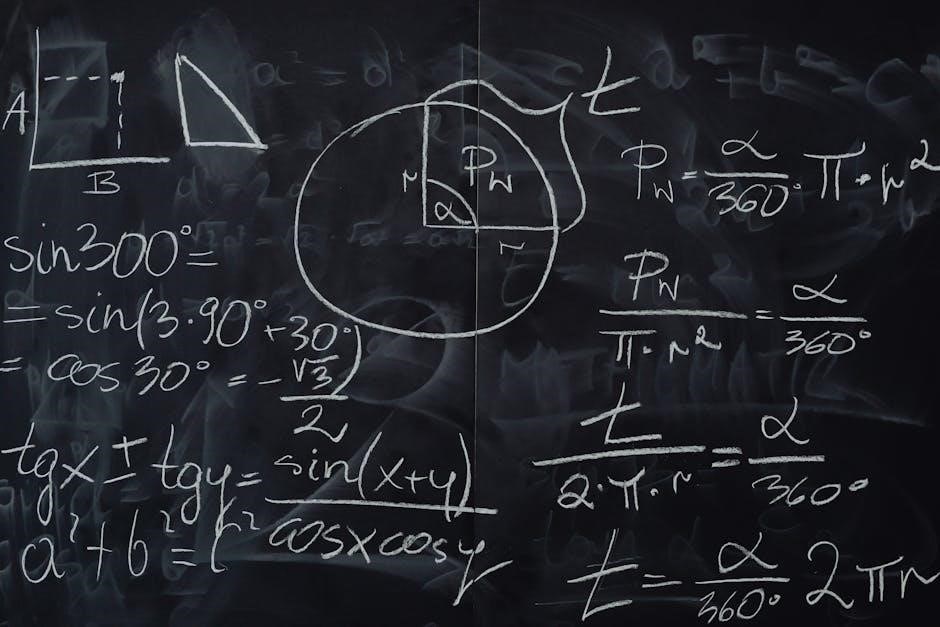
More advanced topics covered include combined events – using ‘and’ and ‘or’ rules‚ alongside probability tree diagrams for visualizing multiple outcomes. Practice questions focus on applying these skills to various scenarios‚ preparing students for exam-style problems. Mastering probability is essential for success in the 2025/2026 GCSE Mathematics assessment.
Effective Revision Techniques
GCSE Maths revision isn’t just about re-reading notes; active recall is key. CGP and Richard Parsons guides emphasize past paper practice as the most effective method‚ familiarizing students with exam formats and question styles. Creating flashcards for formulas and key concepts aids memorization‚ while mind maps help visualize connections between topics.
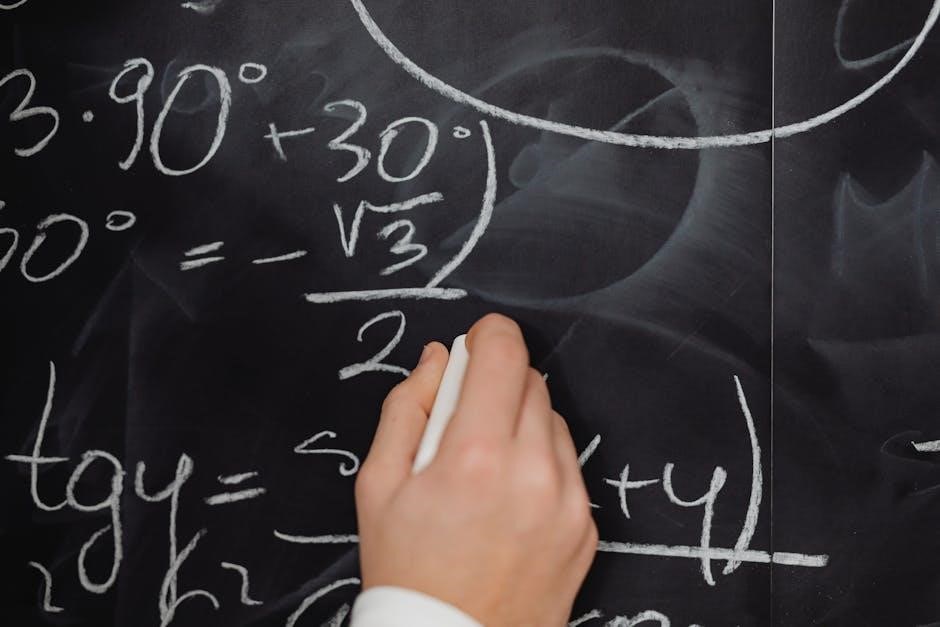
Regular‚ spaced repetition is crucial – short‚ frequent sessions are more beneficial than cramming. Utilizing online resources alongside revision guides provides varied practice. Students should analyze their mistakes from past papers‚ focusing on areas needing improvement. A structured approach‚ incorporating these techniques‚ maximizes GCSE success in 2025/2026.
Past Paper Practice
GCSE Maths revision guides‚ like those from CGP and Richard Parsons‚ consistently highlight past paper practice as paramount. This isn’t simply about answering questions; it’s about simulating exam conditions – time constraints‚ question types‚ and the pressure of assessment. Analyzing previous papers reveals recurring themes and preferred question styles by examiners.
Focus on identifying weaknesses and understanding where marks are frequently lost. Don’t just check answers; dissect the method and reasoning behind each solution. Completing full papers builds stamina and confidence for the 2025/2026 exams. Effective practice involves timed attempts followed by detailed self-assessment and targeted revision.
Flashcards and Mind Maps
GCSE Maths revision benefits significantly from active recall techniques‚ making flashcards and mind maps invaluable tools. Flashcards are ideal for memorizing formulas‚ definitions‚ and key concepts – quick‚ focused bursts of information. Mind maps‚ conversely‚ excel at illustrating the interconnectedness of mathematical topics‚ revealing the bigger picture.
Creating these resources yourself reinforces learning‚ forcing you to actively process the information. Colour-coding and visual cues enhance memory retention. Use mind maps to link different areas of algebra‚ geometry‚ or statistics. Regularly reviewing both flashcards and mind maps‚ especially in the lead-up to the 2025/2026 exams‚ solidifies understanding.
Recommended Revision Guides & Resources
CGP Revision Guides consistently receive positive feedback‚ particularly their AQA and Edexcel specific offerings. Customers highlight their clear explanations and comprehensive coverage‚ making complex topics accessible. Richard Parsons Revision Guides are also highly regarded‚ praised for conciseness and effectiveness‚ even for students who find maths challenging.
These guides often include practice questions and exam-style papers‚ crucial for building confidence. Amazon reviews frequently mention how these resources aid in achieving desired grades‚ with some users reporting success in passing their GCSE exams. Utilizing these guides alongside online resources provides a robust revision strategy for the 2025/2026 exams.
CGP Revision Guides (AQA‚ Edexcel)
CGP offers dedicated revision guides for both AQA and Edexcel GCSE Maths‚ frequently updated for the latest 2025 and 2026 exam specifications. These guides are praised for their straightforward language and well-structured content‚ breaking down complex concepts into manageable sections. They include a wealth of practice questions‚ ranging from straightforward exercises to challenging exam-style problems.
Many guides now incorporate online resources like videos and interactive quizzes‚ enhancing the learning experience. Customer feedback consistently highlights their usefulness‚ with some stating they were instrumental in achieving passing grades. CGP’s focus on clarity and comprehensive coverage makes them a popular choice for GCSE revision.
Richard Parsons Revision Guides
Richard Parsons’ GCSE Maths revision guides are highly regarded for their concise yet comprehensive approach to the subject matter. Available for both Higher and Foundation tiers‚ these guides provide clear explanations and worked examples‚ aiding understanding for students of all abilities. They often include online editions‚ offering additional practice and support.
Reviewers consistently commend the guides’ ability to distill essential information effectively‚ making them particularly beneficial for students who aren’t naturally inclined towards mathematics. The guides are designed to build confidence and secure a good grade‚ proving invaluable during exam preparation. They are a trusted resource for GCSE success.
Online Resources for GCSE Maths
GCSE Maths revision isn’t limited to textbooks; numerous online resources significantly enhance learning. CGP and Richard Parsons guides frequently offer accompanying online editions‚ providing interactive quizzes and video tutorials to reinforce understanding. These digital components cater to diverse learning styles‚ offering a dynamic alternative to traditional methods;
Amazon provides access to a wide range of GCSE Maths resources‚ including digital versions of popular revision guides. Utilizing these platforms allows students to practice past papers‚ access detailed explanations‚ and track their progress effectively. Supplementing textbook study with online tools is crucial for maximizing exam preparation and achieving optimal results.